Meta Description: Discover outsourcing small business accounting in this guide: benefits, costs, steps to choose services, tips, and mistakes to avoid for entrepreneurs and startups. Save time and money!
Introduction
Running a small business is exhilarating, but the financial side can quickly become overwhelming. Whether you’re a solo entrepreneur juggling client work and invoices, an e-commerce owner tracking multi-channel sales, a brick-and-mortar retailer buried in receipts, or a startup founder scaling operations, you’ll face similar pain points: the high cost of in-house accountants, tax risks from DIY methods, and the time drain of managing books. This guide is designed for these groups—offering solutions by outsourcing small business accounting so you can focus on growth.
This comprehensive guide demystifies outsourced accounting services for small businesses at various stages: solo freelancers, e-commerce startups, physical retailers, and new founders. We’ll cover the basics, key factors to consider, a step-by-step selection process, expert advice, common pitfalls, and more—each tailored to the challenges these groups face. By the end, you’ll be equipped to choose the right provider, potentially saving 40-60% on costs compared to in-house hires while gaining professional insights. Whether your revenue is $50k-$250k or you’re in early growth, outsourcing can transform financial disorganization into strategic clarity for your business type.
Understanding the Basics:
What is Outsourced Accounting?
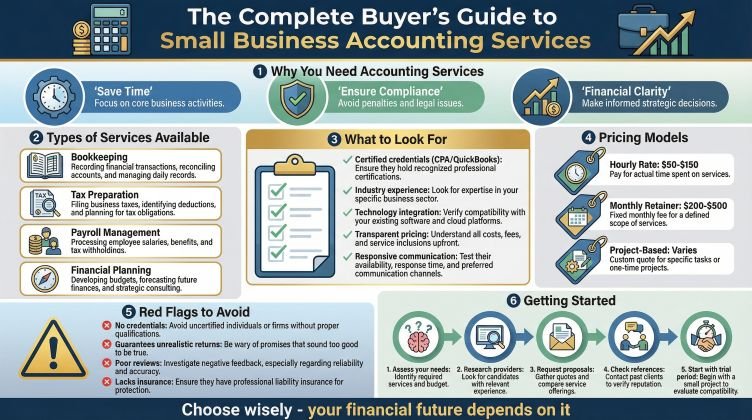
Outsourced accounting means engaging external professionals or firms to manage your financial tasks, from daily bookkeeping to tax preparation and strategic advice. Unlike traditional in-house roles, it’s flexible and scalable—pay only for the services you need. Small businesses can access experts without the costs of salaries, benefits, or training. Bookkeeping: Recording transactions, reconciling accounts, managing payables/receivables.
- Payroll: Handling employee payments, taxes, and compliance.
- Tax Services: Filing returns, maximizing deductions, avoiding penalties.
- Financial Reporting: Generating profit/loss statements, balance sheets, and cash flow forecasts.
- CFO-Level Advice: Budgeting, forecasting, and growth strategies for startups.
Why Outsource for Small Businesses?
Outsourcing addresses pain points by reducing the $65,000-$75,000 cost of a full-time bookkeeper with monthly fees from $500. Experts prevent IRS errors and save up to 20 hours per week, improving cash flow visibility.
For freelancers and solo entrepreneurs (ages 30-50): Streamline invoicing and deductions to reduce administrative burden and maximize take-home pay.
- For e-commerce owners (ages 25-45): Integrate outsourced services with major platforms such as Shopify to ensure seamless management of multi-channel sales and inventory.
- For brick-and-mortar retailers (ages 40-60): Automate receipt tracking and streamline the process to improve accuracy and efficiency.
- For startups and early-stage founders (ages 25-40): Scale financial workflows efficiently without the burden of fixed staffing costs.
Statistics show that 54% of small business owners lack strong financial literacy, underscoring the importance of outsourcing for informed decision-making. Evaluating several factors to ensure it matches your needs requires the right service.
Cost Structure
Costs vary by business size and services. Basic bookkeeping for small ops: $500-$2,500/month. Full suite for growing firms: $2,500-$5,000/month. Hourly rates: $50-$100. Retainers provide predictability. Compared to in-house, Outsourcing saves 15-30% overall.
Factor in value: A good provider spots savings, such as overlooked deductions and offsetting fees.
Expertise and Certifications
Look for CPAs or CMAs with industry experience. E-commerce needs sales tax pros; startups want fundraising savvy. Check for U.S. GAAP knowledge if applicable.
Technology Integration
Modern services use tools like QuickBooks, Xero, or NetSuite for seamless integration. Ensure cloud access for real-time financial data. ta breaches are a risk—choose firms with encryption, compliance certifications (e.g., SOC 2), and clear privacy policies.
Scalability and Support
As your business grows, services should adapt. Seek 24/7 support via Slack or email, as Haven offers.
Step-by-Step Guide
Follow this process to outsource effectively.
Step 1: Assess Your Needs
Identify pain points: Are you overwhelmed by paperwork? Missing tax deadlines? List required services (e.g., bookkeeping, payroll) and budget. For freelancers: Focus on deductions. Startups: Add forecasting.
Step 2: Research Providers
Search for top firms like Bench, Pilot, or Bookkeeper360. Read reviews on Reddit or sites like Clutch. Seek referrals from networks.
Step 3: Evaluate and Compare
Interview 3-5 candidates. Ask about experience, fees, tech, and references. Request demos. Compare using a table:
| Provider | Monthly Cost | Services | Best For |
| Bench | $299+ | Bookkeeping, Taxes | Freelancers |
| Pilot | $499+ | Full-Suite, CFO | Startups |
| Merritt | $190+ | Basic Bookkeeping | Small Retail |
Step 4: Onboard and Integrate
Gather documents (tax returns, statements). Set up integrations. Establish communication protocols. Timeline: 1-4 weeks.
Step 5: Monitor and Adjust
Review monthly reports. Provide feedback. Scale as needed.
Ready to start? Bench offers tailored bookkeeping for small businesses—sign up for a free trial. Get started with Bench.
Expert Tips
Insights from pros to guide your choice.
- Prioritize Industry Fit: “Choose accountants experienced in your sector for nuanced advice,” says Jana Kelly, CPA at Crowe.
- Check Tech Savvy: Ensure integration with your tools—saves time.
- Seek Proactive Partners: Look for advisors offering forecasts, not just compliance.
- Verify References: Contact past clients for real feedback.
- Budget Wisely: “Don’t cheap out—quality prevents costly errors,” advises experts.
- Hybrid Approach: Combine software like QuickBooks with services for efficiency.
For e-commerce, Pilot integrates seamlessly with Shopify. Explore Pilot.
Common Mistakes
Avoid these pitfalls for smooth outsourcing.
Mistake 1: Focusing Solely on Cost
Cheapest isn’t best—leads to errors. Solution: Balance price with quality.
Mistake 2: Poor Communication
Unclear expectations cause delays. Solution: Set SLAs upfront.
Mistake 3: Ignoring Security
Data risks abound. Solution: Choose SOC 2-compliant firms.
Mistake 4: Not Defining Scope
Over- or under-outsourcing. Solution: Assess needs first.
Mistake 5: Skipping Due Diligence
Bad fit wastes time. Solution: Check credentials and reviews.
Mistake 6: Overlooking Scalability
Outgrow providers quickly. Solution: Pick adaptable firms.
Conclusion
Outsourcing small-business accounting saves costs and accelerates growth by addressing key challenges. By understanding the basics, considering key factors, following the step-by-step guide, using expert tips, and avoiding mistakes, you’ll secure a partner that increases efficiency and insights.
For startups, Kruze Consulting offers specialized services—start now and transform your finances with expert help. Seeking flexible solutions? Check Bookkeeper360 and discover how outsourcing can empower your growth. Don’t wait—take decisive action today to secure your business’s financial future. Your next step starts here, and your business’s success depends on it.